

Files
Download Full Text (3.2 MB)
Description
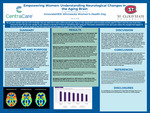
Women tend to have more neurological changes than men as they age starting in their mid-30s (Mosconi, 2024). While aging is a natural process, the neurological changes can impact a woman’s personal and professional quality of life (Faubion et al., 2023; Gravini, 2023). For years, women’s neurological symptoms have been ignored by being told that their experiences are normal and just a part of life (Haver, 2025). That narrative is starting to shift with the increased awareness of changes specific to women. There are resources to assess cognitive changes such as memory, processing speed, and word finding and strategies to support brain health. Additionally, it is vital that typical aging changes verses cognitive changes indicating early detection of dementia – Alzheimer’s disease (AD) are a part of the discussion for women’s health.
Publication Date
5-19-2026
City
St. Cloud, MN
Keywords
Neurology, Menopause, Women's health, Aging, Cognitive decline detection, Speech-language-hearing, Speech pathology
Disciplines
Cognitive Neuroscience | Developmental Neuroscience | Neurosciences | Speech Pathology and Audiology | Women's Health
Recommended Citation
McKenzie, Joy, "Empowering Women: Understanding Neurological Changes in the Aging Brain" (2026). InnovateHER Meeting 2026. 20.
https://digitalcommons.centracare.com/innovateher_meeting_2026/20
Included in
Cognitive Neuroscience Commons, Developmental Neuroscience Commons, Neurosciences Commons, Speech Pathology and Audiology Commons, Women's Health Commons
Comments
InnovateHER: Minnesota Women's Health Day